Key takeaway: Cabinet refacing keeps your existing cabinet boxes and installs all-new doors, drawer fronts, and a matching veneer skin — a cosmetic change, finished in 2–4 days for roughly $4,000–$10,000. Cabinet replacement tears everything out and installs brand-new cabinetry — the only option that lets you change the layout — over 1–3 weeks for roughly $12,000–$35,000+. Choose refacing when the boxes are solid and the layout works; choose replacement when the boxes are damaged, or you want to move, resize, or add cabinets.
When homeowners start planning a kitchen update, cabinets are almost always the biggest single line item — and the first real fork in the road. You can keep the cabinet boxes you have and change how they look (refacing), or you can replace them entirely (replacement). The two paths differ enormously in cost, timeline, disruption, and what you can actually change. This 2026 guide compares them head to head across every factor that matters, so you can walk into a design consultation knowing which conversation you’re having.
If countertops are your other big decision, our quartz vs. granite countertops guide covers that fork in the same detail.
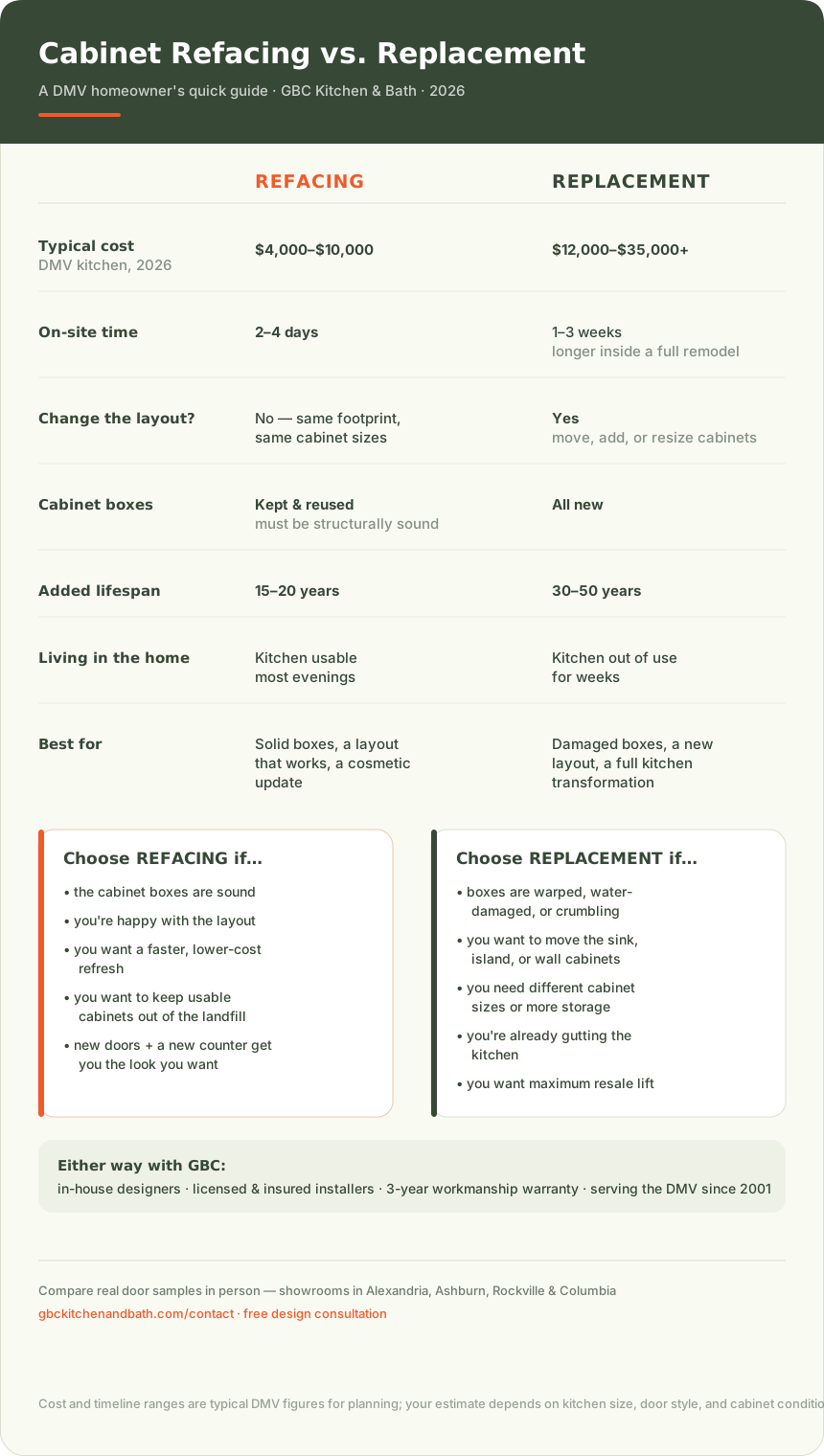
Cabinet Refacing vs. Replacement: Quick Comparison
| Factor | Refacing | Replacement |
|---|---|---|
| What it is | New doors, drawer fronts & veneer over existing boxes | All-new cabinetry, boxes and all |
| Typical cost (DMV, 2026) | $4,000–$10,000 | $12,000–$35,000+ |
| On-site time | 2–4 days | 1–3 weeks (longer in a full remodel) |
| Change the layout? | No — same footprint and sizes | Yes — move, resize, add cabinets |
| Cabinet boxes | Kept and reused (must be sound) | All new |
| Added lifespan | ~15–20 years | ~30–50 years |
| Kitchen downtime | Usable most evenings | Out of use for weeks |
| Waste to landfill | Minimal (doors and hardware only) | Full teardown of old cabinetry |
| Best for | Solid boxes, a layout that works, a cosmetic refresh | Damaged boxes, a new layout, a full transformation |
What Is Cabinet Refacing?
Cabinet refacing keeps your existing cabinet boxes in place and replaces everything you see and touch. The cabinet “box” — the plywood or particleboard shell screwed to your wall and floor — stays exactly where it is. The installer removes the old doors and drawer fronts, then applies a thin new skin (wood veneer or a rigid thermofoil/laminate) to the visible face frames and end panels, and hangs brand-new doors and drawer fronts in the style and finish you choose. New hinges, new handles or knobs, and soft-close hardware go on at the same time. Interior shelving can be left as-is, re-veneered, or upgraded with roll-out trays.
The result looks like a new kitchen from across the room, because every surface you actually look at is new. What you’re reusing is the structural shell and the current layout. Refacing is sometimes called “cabinet resurfacing” or “cabinet refronting,” and it sits between a simple repaint and a full replacement in both cost and impact.
Refacing does change more than color. Because you’re choosing new doors, you can move from raw oak to a painted Shaker style, swap a cathedral-arch door for a flat slab, add glass inserts to a few uppers, or introduce a two-tone look with a contrasting island. You just can’t move the island.
What Is Cabinet Replacement?
Cabinet replacement removes all existing cabinetry — boxes, doors, hardware, and fasteners — and installs brand-new cabinets. Everything comes out down to the wall studs and subfloor. New cabinets are then set, leveled, shimmed, and secured, followed by new countertops, backsplash, and often flooring and lighting. Replacement is what most people picture when they think “kitchen remodel.”
New cabinets come in three construction tiers that drive most of the price difference:
- Stock cabinets are pre-built in standard sizes and finishes, available quickly, and the most budget-friendly new option.
- Semi-custom cabinets start from standard boxes but allow size, finish, and storage modifications — the sweet spot for most DMV kitchens.
- Custom cabinets are built to your exact specifications with no size or design constraints, and sit at the top of the range.
Replacement is the only path that lets you reconfigure the kitchen: relocate the sink or range, add a pantry, build a bigger island, raise uppers to the ceiling, or change cabinet depths. If your layout is holding the room back, that flexibility is the whole point.
What About Refinishing (Painting)?
Refinishing — professionally sanding and spray-painting or restaining your existing doors and boxes — is the third, cheapest option, and it only changes color. Expect roughly $2,000–$6,000 for a professional job with proper prep, primer, and a sprayed finish (not brushed). You keep your current doors, current hardware layout, and current profile — a raised-panel oak door stays a raised-panel door, just white now.
Refinishing makes sense when you like your doors, the boxes and doors are in good shape, and you only want a color change on a tight budget. It’s less durable than a factory-applied finish on a new door, and it does nothing for dated door styles, worn drawer boxes, or missing soft-close. Think of the three options as a ladder: refinishing changes color, refacing changes color and style, replacement changes color, style, and layout.
Cost: Refacing vs. Replacement (DMV, 2026)
Refacing typically runs $4,000–$10,000 for a standard kitchen; replacement runs $12,000–$35,000 or more installed. The ranges are wide because kitchen size (measured in linear feet of cabinetry), door material, and finish all move the number. The table below shows how a typical 12–18 linear-foot DMV kitchen tends to break down.
| Scope | Refinishing (paint) | Refacing | Replacement |
|---|---|---|---|
| Small kitchen (≤12 lin. ft.) | $1,800–$3,500 | $3,500–$7,000 | $9,000–$18,000 |
| Typical kitchen (12–18 lin. ft.) | $2,500–$5,000 | $5,000–$10,000 | $14,000–$28,000 |
| Large / open kitchen (20+ lin. ft.) | $4,000–$7,000 | $9,000–$15,000 | $25,000–$50,000+ |
| What drives the price up | Detailed doors, heavy prep, staining | Wood veneer vs. laminate, glass doors, many drawers | Semi-custom vs. custom, to-ceiling uppers, moved plumbing, specialty storage |
| What you get | New color only | New doors, fronts, veneer, hardware | Everything new, layout changes possible |
A few things worth knowing about the money:
- Refacing saves roughly 30–50% versus comparable new cabinets because you’re not paying for boxes or the labor to build and install them.
- Materials matter more in refacing than people expect. Real wood veneer with solid-wood doors costs noticeably more than rigid thermofoil or laminate — sometimes approaching the price of stock replacement.
- Replacement costs jump when the project grows. Moving the sink means a plumber; going to the ceiling means new crown and sometimes drywall work; a bigger island can mean electrical. These aren’t cabinet costs, but they ride along with replacement.
- Countertops are usually replaced either way. Refacing almost always includes a new countertop, since removing the old doors and updating the look with a 20-year-old counter rarely satisfies anyone. Budget for that separately using our Northern Virginia kitchen remodel cost guide or the Maryland cost guide.
Timeline & Disruption
Refacing is measured in days; replacement is measured in weeks. A refacing crew is typically on site 2–4 days, occasionally up to a week for a large kitchen with many drawers or glass doors. Your cabinets stay usable for most of that time — the boxes never leave, so you keep your dishes where they are, and the kitchen is functional most evenings.
Replacement takes 1–3 weeks for the cabinet phase alone, and longer when it’s part of a full remodel with countertops, backsplash, flooring, and paint. During replacement the kitchen is genuinely out of commission: cabinets are gone, the sink is disconnected, and appliances are pulled or draped. Most families set up a temporary kitchen with a microwave and a coffee station elsewhere in the house.
There’s also a lead-time difference that happens before anyone shows up. Refacing doors are a smaller order and often arrive in 2–4 weeks. New semi-custom or custom cabinets commonly take 4–8 weeks to build and ship after the design is finalized. Add that to your planning either way.
What Changes and What Stays
The clearest way to choose is to list what you actually want to change. Match your wish list to the column that covers it.
| You want to change… | Refinishing | Refacing | Replacement |
|---|---|---|---|
| Cabinet color | ✅ | ✅ | ✅ |
| Door style (e.g. to Shaker or slab) | ❌ | ✅ | ✅ |
| Hardware + soft-close hinges/glides | ⚠️ add-on | ✅ | ✅ |
| Glass-front or open display cabinets | ❌ | ✅ (on some) | ✅ |
| Cabinet interiors / roll-out storage | ❌ | ⚠️ limited | ✅ |
| Move the sink, range, or fridge | ❌ | ❌ | ✅ |
| Add an island or peninsula | ❌ | ❌ | ✅ |
| Take uppers to the ceiling | ❌ | ❌ | ✅ |
| Change cabinet depth or height | ❌ | ❌ | ✅ |
| Remove a wall / open the floor plan | ❌ | ❌ | ✅ |
If everything you want lives in the top half of that table, refacing will very likely get you there for far less money. If you checked anything in the bottom half, you’re looking at replacement — and probably a broader kitchen remodel.
The Deciding Factor: Cabinet Box Condition
Refacing is only as good as the boxes you’re keeping. Before you fall in love with the savings, the boxes have to pass inspection. Good candidates for refacing usually have:
- Solid plywood or well-built particleboard boxes with no sagging shelves or blown-out screw holes.
- No water damage — swelling at the sink base, soft toe kicks, or delaminating bottoms are disqualifying.
- Square, plumb face frames that still hold a door properly. Racked or twisted boxes won’t accept new doors cleanly.
- A layout you can live with for the next 15–20 years.
Boxes that are 25–30+ years old, made of low-grade particleboard, water-stained, or already showing failure are poor candidates. Spending $8,000 to reface cabinets that need replacing in five years is the one refacing mistake to avoid. A designer can assess this quickly during a free in-home or showroom consultation — it’s the single most important question in this whole decision.
Durability & Lifespan
New cabinets last 30–50 years; refacing adds roughly 15–20 years to boxes that are structurally sound. The new doors, drawer fronts, veneer, and hardware you get with refacing are genuinely new and will wear like new. The limiting factor is the box underneath: refacing doesn’t reset its age. If your boxes are 15 years old and solid, refacing can carry the kitchen to the 30-year mark comfortably. If they’re already near end of life, you’re buying less runway.
Replacement resets the clock entirely. Quality semi-custom and custom cabinetry, installed correctly and kept dry, routinely lasts decades — often longer than the homeowners keep the house.
Resale Value & ROI
Both refacing and replacement make a kitchen read as “updated” to buyers, which is what drives resale impact — but they play different roles. Minor kitchen updates, the category that includes refacing and new hardware, consistently post some of the strongest cost-recouped percentages in the annual Cost vs. Value data, precisely because the spend is modest. A refaced kitchen that looks current can remove a major buyer objection for a fraction of a full remodel’s cost.
Full replacement adds more total dollar value, especially when it corrects a bad layout or opens the room, and especially in higher-priced homes where buyers expect new cabinetry. But it costs multiples more, and the percentage recouped is typically lower than a minor update. If you’re remodeling primarily to sell within a year or two, refacing is often the smarter financial move. If you’re staying and want the kitchen to function better, replacement’s daily-life payoff matters more than the resale math. See real transformations in our kitchen remodel before and after gallery.
Sustainability & Waste
Refacing keeps a full set of cabinet boxes out of the landfill. Construction and demolition debris is one of the largest waste streams in the country, and kitchen cabinetry — bulky, mixed-material, hard to recycle — is a meaningful part of a remodel’s footprint, per U.S. EPA data. Refacing sends only the old doors and hardware out, and even those can sometimes be donated. For homeowners weighing the environmental cost of a remodel, reusing sound boxes is the clear lower-impact choice. Replacement generates far more debris, though quality new cabinets that last 40 years spread that impact over a long life.
Design & Style Options
Refacing’s style range is wider than most people assume, but replacement still wins on flexibility. With refacing you choose from the same door catalogs used for new cabinets — painted Shaker, flat-panel slab, beaded inset looks, and a full spectrum of paint and stain colors. You can add a contrasting island, glass uppers, and modern hardware. What refacing can’t do: change the size and position of openings, so a run of small, choppy uppers stays a run of small, choppy uppers, just prettier.
Replacement lets you rethink proportions entirely — taller uppers, deeper drawers instead of doors, a 42-inch cabinet where two 15-inch ones used to be, integrated panels for the dishwasher and fridge. Browse door styles, finishes, and storage options on our cabinets page to see what’s available in each direction.
The Refacing Process, Step by Step
Knowing how the work actually goes helps set expectations. A typical GBC refacing project runs like this:
- Design consultation and measure. A designer confirms the boxes are sound, measures every opening, and helps you choose a door style, finish, and hardware. This is also where you decide on any small tweaks — adding a few glass doors, a contrasting island color, or roll-out trays inside base cabinets.
- Order and lead time. Your doors, drawer fronts, and veneer are made to your measurements. Expect roughly 2–4 weeks before installation day.
- Prep (day 1). The crew removes all doors, drawer fronts, and old hardware, then cleans and lightly sands the face frames and exposed box sides so the new veneer bonds properly.
- Veneer and end panels (days 1–2). New wood or laminate skin is applied to every visible box surface — face frames, exposed sides, toe kicks, and any open shelving that shows.
- New doors and drawer fronts (days 2–3). New fronts are hung and aligned, new soft-close hinges and drawer glides installed, and handles or knobs added.
- Countertop and finishing touches (days 3–4). If you’re updating the countertop — most people are — it’s templated and installed in this window, followed by a new backsplash if that’s in scope. A final walkthrough checks alignment, soft-close action, and finish.
Throughout, your cabinet interiors stay loaded, the plumbing stays connected except during countertop swap, and you can cook most evenings.
The Replacement Process, Step by Step
Replacement is a bigger sequence with more trades involved.
- Design and layout. Beyond finishes, you’re deciding the actual plan: where the sink and range go, cabinet sizes and heights, island dimensions, pantry and specialty storage, and appliance panels. This stage takes longer than a refacing design.
- Order and lead time. Semi-custom and custom cabinets typically take 4–8 weeks to build after the plan is signed off.
- Demolition (days 1–2). Old cabinets, countertops, and often flooring and backsplash come out. Appliances are disconnected and moved.
- Rough-in trades (days 2–7). Any plumbing relocation, added electrical circuits, and drywall repair happen now, with inspections where required.
- Cabinet installation (days 5–12). New boxes are set, leveled, and secured; fillers and trim are fitted; crown and light rail go on.
- Countertops (after cabinets). Templated once cabinets are in, then fabricated and installed about a week later.
- Backsplash, flooring, paint, final plumbing and electrical, appliance hookup, and punch list.
The kitchen is unusable for most of this. Plan on 3–6 weeks for a cabinet-focused replacement and 8–12+ weeks for a full remodel.
Pros and Cons at a Glance
Refacing — pros: much lower cost; 2–4 day timeline; kitchen stays usable; keeps sound boxes out of the landfill; real door-style and color change; adds soft-close hardware. Refacing — cons: can’t change layout or cabinet sizes; only as durable as the existing boxes; real-wood veneer options can approach stock-replacement pricing; not a fix for water-damaged or failing cabinets.
Replacement — pros: completely new, full lifespan; any layout change is possible; widest design and storage flexibility; highest total resale value on a full transformation; solves structural and water-damage problems permanently. Replacement — cons: 2–5x the cost; weeks of kitchen downtime; longer lead times; more demolition and waste; usually pulls in plumbing, electrical, and drywall work.
Five Myths About Cabinet Refacing
“Refacing is basically just contact paper.” No. Quality refacing uses the same solid-wood or rigid-thermofoil doors sold for new cabinets, plus a matching 1/4-inch veneer — not peel-and-stick film. A cheap DIY kit can look like contact paper; a professional job does not.
“Refaced cabinets always look refaced.” When the boxes are square and the installer is careful with reveals and alignment, a refaced kitchen is indistinguishable from new cabinetry to anyone who isn’t opening a door to inspect the box interior.
“You can’t change anything but the color.” You can change door style, finish, hardware, hinges, add glass fronts, add a contrasting island, and add some interior storage. You can’t change layout or cabinet sizes — that’s the real line.
“Refacing isn’t worth it because you still pay for a countertop.” The countertop is a separate decision either way. Even with a new counter, refacing plus counter usually lands well below new cabinets plus counter.
“Refacing voids your ability to do a real remodel later.” It doesn’t. If you reface now and decide in eight years to gut the kitchen, the refaced doors come off with everything else. You’ve bought eight good years for a fraction of the cost.
Questions to Ask Before You Decide
Bring these to your consultation — the answers point clearly to one path:
- Are my cabinet boxes structurally sound and dry? If no, replace.
- Does my current layout work for how I cook and live? If no, replace.
- Do I want to move the sink, range, refrigerator, or add an island? If yes, replace.
- Is my main complaint the color, door style, or worn hardware? If yes, refacing solves it.
- Am I selling within two years? Lean refacing for the better return on a modest spend.
- How long do I plan to stay? Ten-plus years with sound boxes still favors refacing; if the boxes are marginal, replace and get the full lifespan.
- What’s my total budget, including countertop and backsplash? Refacing frees up budget for better counters, appliances, or lighting.
Which Should You Choose?
Use this decision framework:
- Choose refacing if your cabinet boxes are structurally sound, you’re happy with the layout, you want a faster and lower-cost refresh, you want less construction waste, and new doors plus a new countertop will get you the look you want.
- Choose replacement if the boxes are warped, water-damaged, or crumbling; you want to move the sink, range, or island; you need different cabinet sizes or significantly more storage; you’re already gutting the kitchen; or you want the maximum resale lift from a full transformation.
- Choose refinishing if you like your current doors and hardware layout, everything is in good shape, and you only want a color change on the tightest budget.
Still unsure? The tie-breaker is almost always box condition and layout. If a designer confirms your boxes are solid and you’re not itching to move anything, refacing is the value play. If either of those isn’t true, replacement will serve you better in the long run.
Refacing vs. Replacement for Common DMV Situations
A 1990s–2000s kitchen with oak cabinets in good shape. Classic refacing candidate. The boxes from this era are often solid plywood; the problem is the honey-oak finish and dated door profile, both of which refacing fixes.
A kitchen with a cramped, closed-off layout. Replacement. No amount of new doors changes the fact that the room doesn’t work. This is usually part of a wider kitchen remodel.
A rental or a home you’ll sell within two years. Lean toward refacing or refinishing. You get the “updated kitchen” buyers want without tying up $25,000+ you won’t fully recoup.
A historic Ellicott City or older Alexandria home. It depends on the cabinets and whether the layout is original. Sound period boxes can be beautifully refaced; failing ones, or a kitchen that was awkwardly modernized in the past, usually justify replacement.
Water damage under the sink. Replacement, at least for the affected run. Refacing over swollen, delaminating boxes just hides a problem that will resurface.
How GBC Kitchen & Bath Handles Both
GBC designs and installs both refacing and full cabinet replacement with the same in-house team. During your consultation, a GBC designer assesses your existing boxes, layout, and goals and tells you honestly which path fits — including when refacing would be a poor investment. If you reface, you choose doors and finishes from the same lines used for new cabinets. If you replace, you work through layout, storage, and construction tier with the designer who will see the project through.
Every project is handled by licensed and insured trade professionals and backed by a 3-year workmanship warranty. GBC has served the DMV since 2001, with four showrooms — Alexandria, Ashburn, Rockville, and Columbia — and 800+ Google reviews across those locations. Countertop, cabinet installation, and design are all under one roof, so the team that plans your kitchen is the team accountable for building it.
See Refacing & Replacement Options in Person
The fastest way to decide is to compare real door samples and full cabinets side by side. At any GBC showroom you can hold a refacing door next to a new-cabinet door, see paint and stain colors under real lighting, and get a designer’s read on whether your boxes are good candidates for refacing. Book a free design consultation to get a clear recommendation and a real number for your kitchen.
Ready to Decide Between Refacing and Replacement?
Bring photos of your kitchen — or your whole cabinet situation — to a GBC Kitchen & Bath showroom in Alexandria, Ashburn, Rockville, or Columbia. Book a free design consultation and a designer will assess your boxes, walk you through door styles and finishes, and give you a real recommendation and price for both paths, backed by our 3-year workmanship warranty.
