GBC offers a free in-home estimate. Design drawings follow a signed contract; discuss the proposed design and installation scope with the showroom.
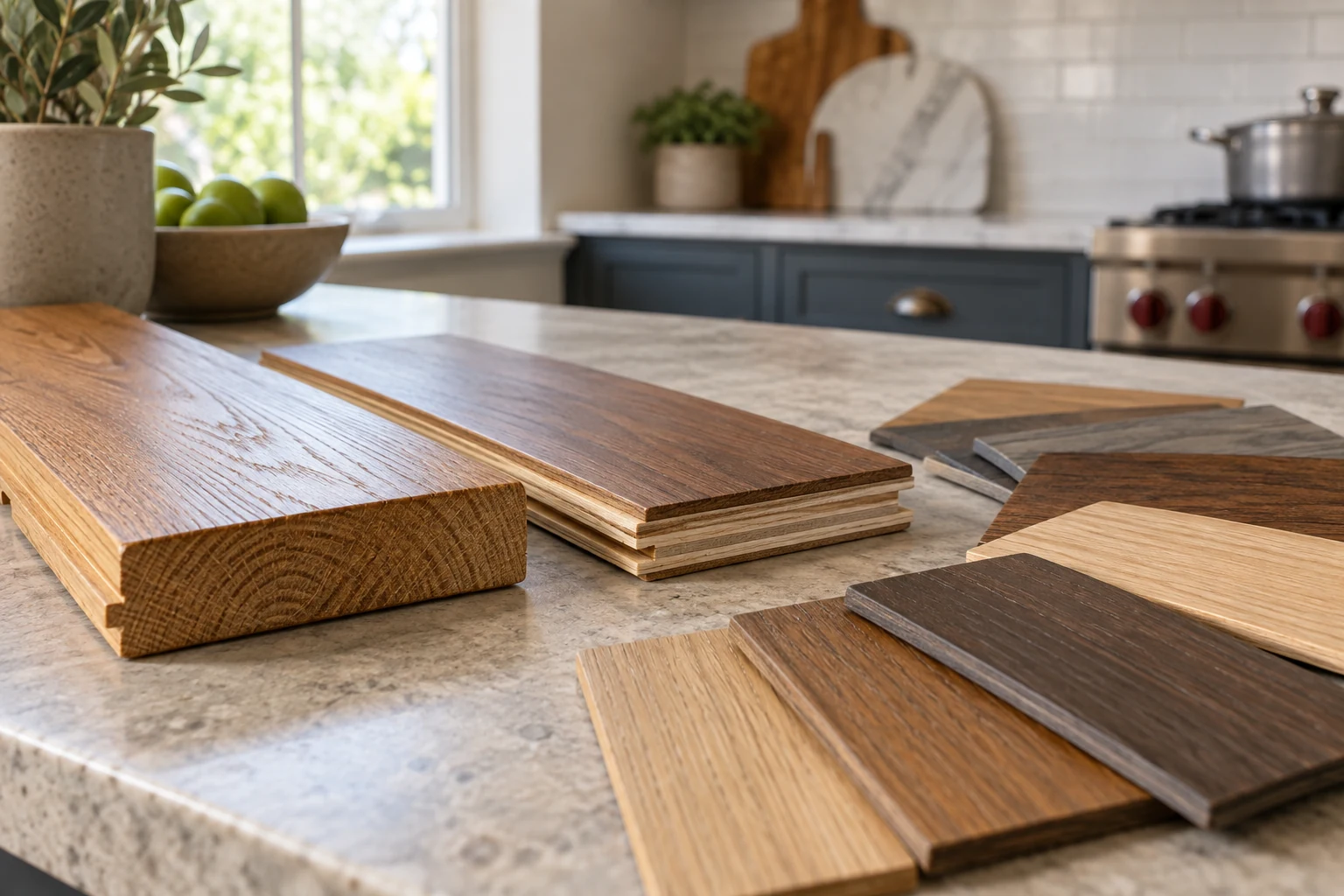
Select kitchen hardwood by comparing the installation location, chosen finish and appearance samples together. Confirm the proposed wood and finish with the installer before treating engineered construction or a coating as a guarantee against moisture damage. Discuss the proposed kitchen remodel.

Kitchen Remodeling: 3 Steps to Finding Your New Hardwood Kitchen Floors
Let’s admit it – hardwood floors are the bee’s knees for kitchens with all styles of décor. It can match with any kitchen vibe, including traditional, contemporary, old-fashioned and country.
There’s a place for hardwood in the heart of everyone’s home. The key is finding the one that best suits the design. You have so many different types of wood you can opt for, including light brown, dark brown, cherry and honey.
As you’re shopping around for materials for your kitchen remodeling project, you will come across the different versions that are available.
Compare hardwood flooring in three steps: choose between engineered and solid construction, review the finish, and collect appearance ideas. Keep the installation location and product instructions in the discussion as you make each choice.
Let’s get to it.
1. Choose Between Engineered and Solid Floors

As you begin doing research for your hardwood floor options, you’ll find there’s a great debate between engineered and solid flooring. There are major differences between the two, so it’s important to note them.
The one you should choose will come down to various factors, such as where the floors will go and your unique needs. For instance, if it’s placed in the kitchen or bathroom, where there’s a high probability of moisture and spills, then engineered flooring may be better.
It also comes down to the type of substrates will be installed on top, such as concrete or gypsum concrete.
Have the installer check the selected floor against the subfloor, installation location and any heating system. Confirm compatibility in the product documentation rather than treating engineered or solid construction as a universal installation approval.
Discuss room humidity and the installation location before selecting the floor. Ask the installer to check the proposed product against those conditions; engineered construction alone is not a guarantee against movement.
That can be a real concern, given the kitchen requires constant cleaning.
If you end up going with sold floors, then you may want to choose rift sawn versus plain sawn or quarter sawn.
2. Select the Finish for the Wooden Floors

Next, it’s time to determine what type of finish you want for your new hardwood floors. The type of finish you select will play a big role in maintaining the appearance of the flooring. Keep in mind the amount of foot traffic your kitchen gets when deciding.
It’s best to choose a finish that is resistant to water, since your floors will be prone to spills in a kitchen setting. It’s also essential for the finish to be durable to where it can handle lots of foot traffic.
Compare the specified finish with the flooring product and the planned kitchen use. Ask the installer to explain the care and application requirements instead of assuming a finish type guarantees protection from water.
Discuss the finish and curing method with the flooring professional. Confirm the proposed process for the selected product rather than treating a general curing method as proof of increased durability.
3. Find Inspirations for Your Kitchen Remodeling

It’s not always easy coming up with ideas for your kitchen remodeling project, even when it’s just the floors you’re doing. Whether you’re planning to redo the entire kitchen or just the floors, you can use ideas.
There are a few great places on the web you can check out, along with home design magazines.
For instance, say you’re looking for a kitchen design that’s sleek and modern. In this case, you should go with a dark wood color, such as mahogany or a stain that’ll give it a dark color.
Then if you want to go for extra-durability, then hickory wood is a great choice. It’ll give your kitchen a distinguished look.
However, if you want a kitchen that’s more rustic, then wide plank Eastern white pine is a great choice. It’s traditional and will give your kitchen a homey feel.
Hand scraped, or distressed wood floors are the perfect option for a kitchen design that’s rustic and hip. But if you want a simple, classic style, then white oak that has a clear, natural finish is suitable.
There’s a lot you can do with your kitchen design based on the color, texture and material of the wood you choose. So, make sure to shop around a lot before you decide.
Shopping for Beautiful Hardwood for Your Kitchen Remodeling
Arrange product selection and installation together with the project team. Confirm availability, delivery and the installation schedule in the proposal instead of relying on an unverified comparison with another retailer.
We have a local showroom you can visit to look firsthand at our beautiful wood options. We carry hardwood from top-notch brands, like Armstrong, Bruce, LM Flooring and Zickgraf.
Before selecting a contractor, ask for the documents relevant to the proposed work. Discuss the installation scope and product warranty terms directly; this article does not verify credentials or promise coverage for every product.
At GBC Kitchen and Bath, we take great pride in the products and services we provide. Whether you’re looking for a complete kitchen overhaul or simply want to makeover the floors, we can help.
Give us a call today to get your free in-home estimate!
Frequently asked questions
What should I discuss before selecting kitchen hardwood?
Discuss the installation location, room conditions and product instructions. Compare the proposed finish with daily use and the maintenance you expect.
Does engineered construction guarantee freedom from moisture damage?
No guarantee is established by the construction label. Have the installer assess the selected floor and conditions before ordering.
Planning and material-removal references
For the wider kitchen-and-bath design discussion, consult the National Kitchen & Bath Association. If your plan removes existing finishes or cabinetry, read the EPA construction and demolition debris resource before discussing what will happen to those materials.
Ready to start your project?
Free consultations, no obligation, and design experts at four DMV showrooms.
Get a free estimate