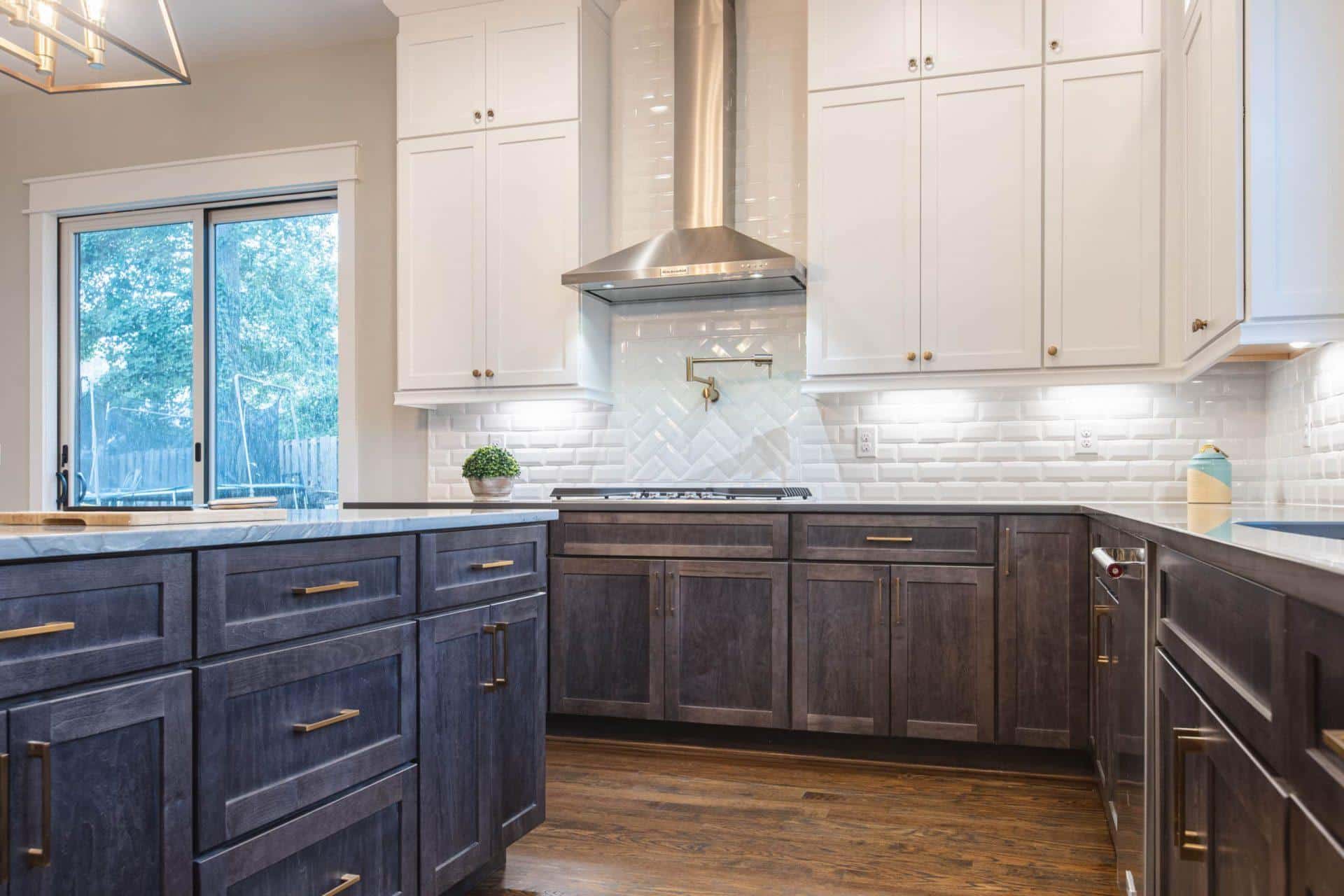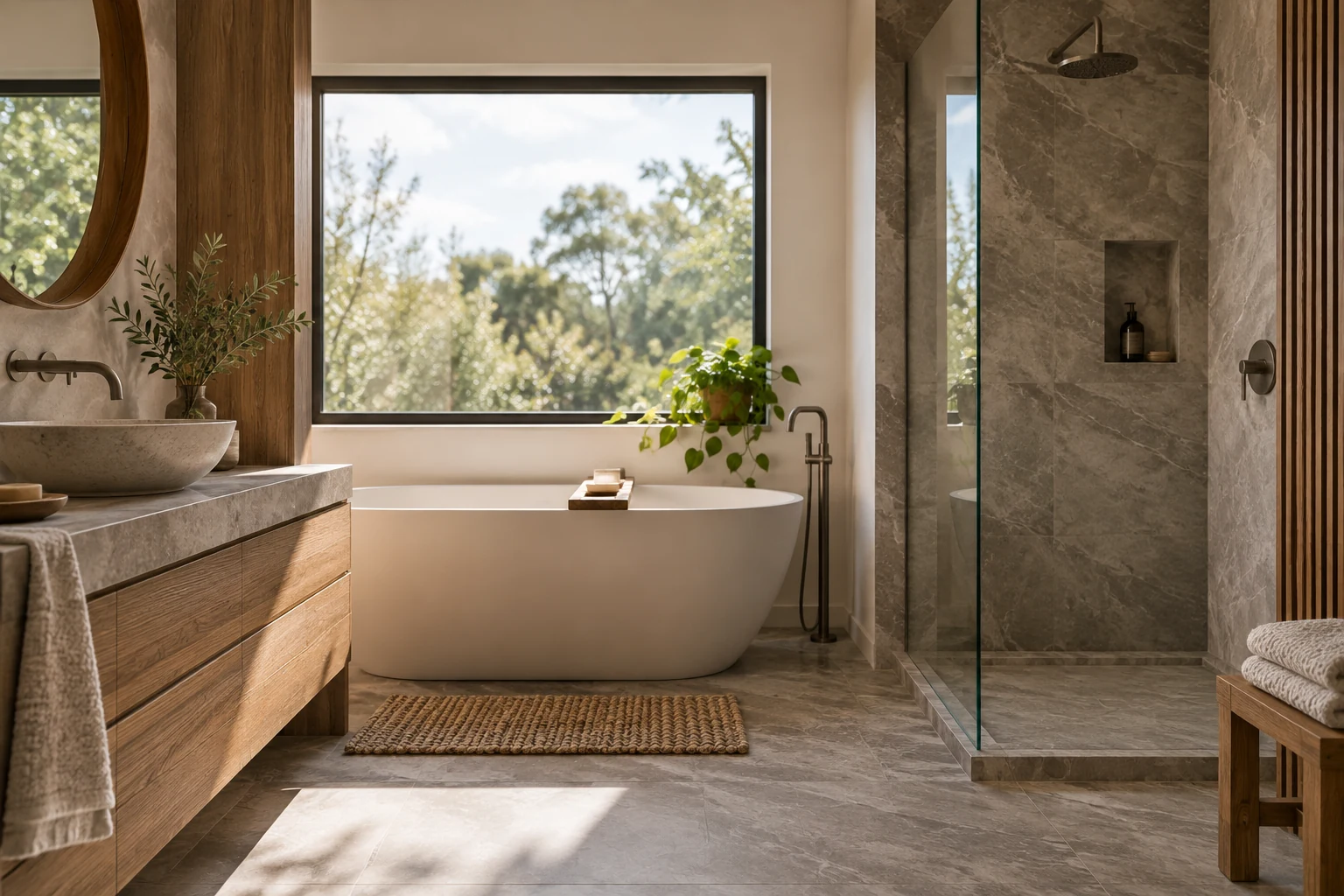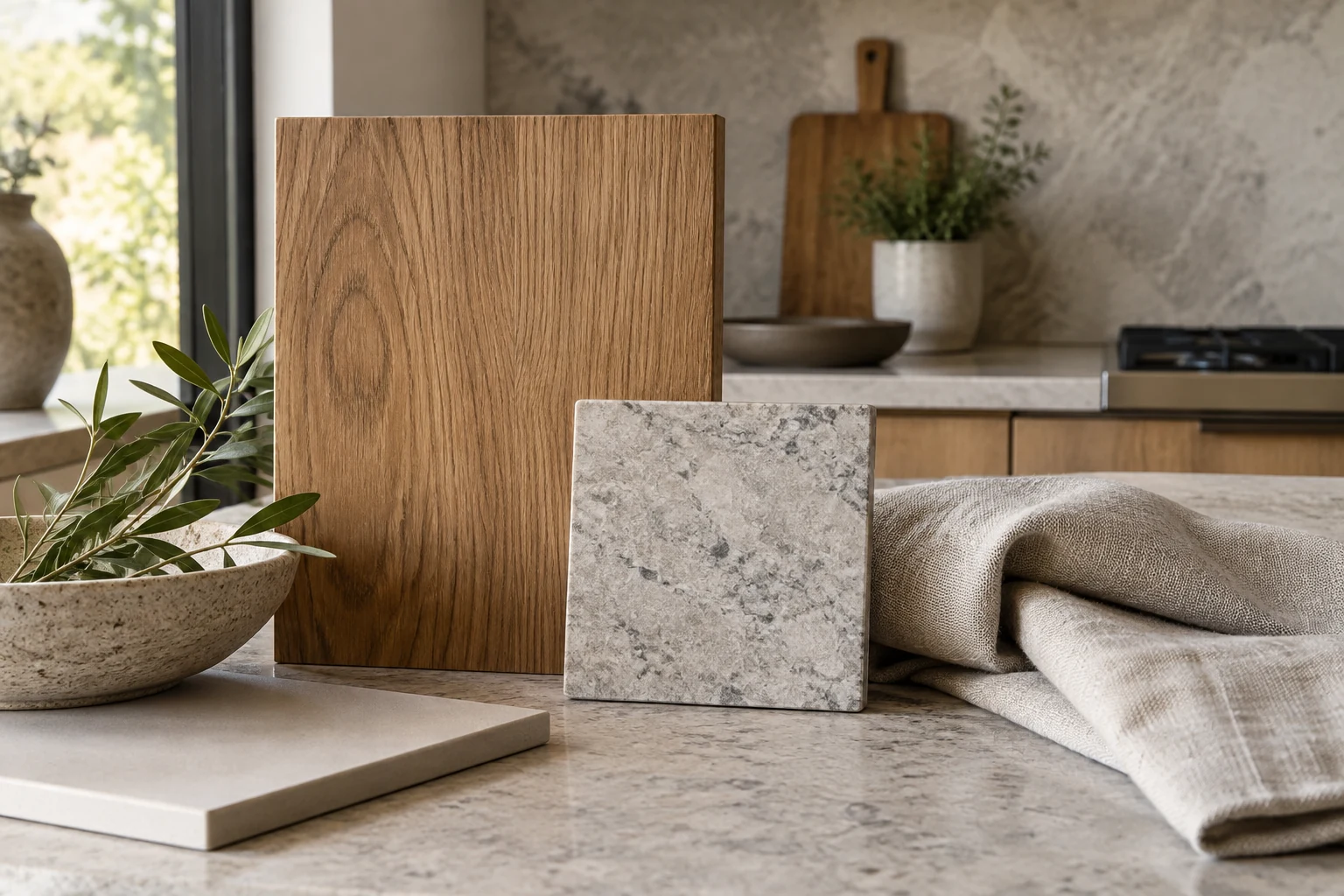

Wood, stone and other natural materials can add texture and warmth to a design. Choose them for the appearance and suitability of the specific product; a natural label alone does not establish durability, low emissions or a lower environmental impact. Related: completed kitchen and bath projects.
Why Choose Natural Materials?
Natural materials include wood, stone, bamboo and other plant-based products. Compare their sourcing, composition, finishes, care needs and suitability for the planned room; environmental performance depends on the product and its production.
First and foremost, natural materials provide a warm and inviting atmosphere. They add character and charm to your home and create a sense of connection to the outdoors. Whether you choose hardwood flooring, natural stone countertops, or bamboo cabinetry, these materials bring a sense of natural beauty to your space.
Durability depends on the selected product and installation. Ask the supplier about scratches, staining, moisture exposure and care rather than assuming every stone or wood product performs alike.
Compare environmental claims against documented sourcing and product information. Natural and synthetic materials cannot be ranked as whole categories without considering production, transport, service life and disposal.
Tips for Maximizing the Use of Natural Materials
Now that we’ve discussed the benefits of natural materials, let’s explore some tips for maximizing their use in your kitchen and bath remodels.
Choose Sustainable Materials
Look for documented sourcing and relevant product information when comparing bamboo, cork or reclaimed wood. Check the installed product’s composition and intended use rather than assuming the material name proves an environmental benefit.
Bamboo cabinetry and flooring must be selected for their specific application and expected moisture exposure. Confirm the product’s installation and care instructions before specifying it in a kitchen or bathroom; do not infer wet-area suitability from the plant itself.
Cork products are distinct from bamboo products. Flooring, wall coverings and other cork finishes have product-specific installation and moisture limitations; obtain the selected manufacturer’s written guidance before using one in a wet area.
Reclaimed wood is also a great choice for kitchen and bathroom remodels. It is wood that has been salvaged from old buildings, barns, and other structures. By using reclaimed wood, you are giving new life to materials that would otherwise go to waste. Reclaimed wood also has a unique character and charm that cannot be replicated with new wood.
Opt for Natural Stone
Natural stone is a classic choice for countertops, flooring, and backsplashes in the kitchen and bathroom. It is durable, timeless, and adds elegance and beauty to any space. Natural stone options include granite, marble, and soapstone.
Compare the selected granite’s finish and care requirements with the intended use. Use trivets for hot cookware and follow the supplier’s cleaner and sealing instructions rather than treating the stone as damage-proof.
Marble’s veining can be a design feature, but calcium-based stone is sensitive to acids. Consider the likelihood of spills and the recommended care before choosing it for a work surface. See the Natural Stone Institute’s care guidance.
Compare the selected soapstone’s finish and care instructions with your preferences. Ask its supplier whether oiling is an optional appearance treatment or part of the recommended care; do not assume a bacteria-resistance or maintenance guarantee.
Incorporate Wood
Wood is a versatile material that can be used in many ways in the kitchen and bathroom. From flooring to cabinetry and even accents like shelving and wall paneling, wood adds warmth and texture to your space.
When it comes to cabinetry, hardwoods like maple, cherry, and oak are popular choices. These woods are durable and long-lasting, and they add a sense of natural beauty to your space. Many homeowners also opt for painted or stained wood cabinets to add a pop of color to their kitchen or bathroom.
For flooring, hardwood is a classic choice that never goes out of style. It is durable and can be refinished multiple times over its lifespan. Other natural wood flooring options include bamboo and cork, which we mentioned earlier as additional product options.
Wood accents like shelving and wall paneling can also add warmth and texture to your space. Reclaimed wood is a great choice for these accents, as it adds a unique character and charm that cannot be replicated with new wood.
Use Natural Textiles
Natural textiles like cotton, linen, and wool can add softness and warmth to your kitchen and bathroom. These textiles can be used for window treatments, shower curtains, and even towels and bath mats.
Cotton, linen and wool can be considered for towels, curtains or rugs according to their feel and appearance. Check the actual textile’s washing, drying and intended-use instructions; its fiber name alone does not establish antimicrobial performance.
Check what an environmental or organic claim actually covers and whether documentation is available. A label does not by itself establish the environmental impact of the complete finished product.
Mix and Match
One of the great things about using natural materials in your kitchen and bathroom remodels is the versatility they provide. By mixing and matching different materials, you can create a unique and personalized space that reflects your style.
For example, you could combine natural stone countertops with wood cabinetry and a cork backsplash. Or, you could opt for a bamboo vanity with a marble countertop and linen shower curtains. The possibilities are endless, and the result is a space that is suited to your preferred appearance.
Conclusion
Choose natural materials by comparing their appearance with the actual product’s suitability and care needs. Bring samples and questions about moisture, finishes and sourcing to the design discussion; a coordinated selection is more useful than a blanket claim that all natural materials perform better.
When comparing coatings and other finished products, ask for composition, emissions and installation information rather than relying on a natural label. The EPA’s source-control and ventilation guidance explains the indoor-air considerations; use that alongside the selected product’s written instructions.
Ready to start your project?
Free consultations, no obligation, and design experts at four DMV showrooms.
Get a free estimate