Glen Burnie is by far the largest of these four communities. It is an unincorporated town and census-designated place in Anne Arundel County, home to 72,891 people at the 2020 census and about 29,600 housing units, just south of Baltimore. Locals call it “Chrome City.” Its growth accelerated with the highways and shopping centers of the mid-20th century, and much of its housing remodels like a postwar suburb.
Reading the grid
Glen Burnie’s center is defined by two roads. The intersection of Central Avenue and Crain Highway divides the community into the NW, SW, NE and SE postal quadrants, which is why addresses here carry directional suffixes you need to get right when you file a permit or order materials.
- Ritchie Highway (MD 2) is the main commercial boulevard, running north to south. It opened in 1939 and once carried nearly all Baltimore traffic headed for Annapolis and the Bay Bridge.
- Crain Highway (MD 3) is the town’s main street. It opened in 1927.
- MD 100 runs west from Glen Burnie toward Ellicott City and Columbia, and is the route to our showroom.
- I-97 is the bypass built in the 1980s that took over the Annapolis traffic, and I-695, the Baltimore Beltway, touches north Glen Burnie.
Places that anchor the area
| Place | What it is |
|---|---|
| Harundale Mall | Opened in 1958 as the first enclosed shopping center east of the Mississippi, developed by James Rouse, who later built Columbia |
| Glen Burnie Mall (1962) and Marley Station (1987) | The larger shopping centers that followed |
| Glen Burnie light rail station | Southern end of the Baltimore Light Rail Cromwell Branch, at Baltimore-Annapolis Boulevard and Dorsey Road, with free park-and-ride |
| Ferndale station | The other Glen Burnie stop on the same line |
| Baltimore & Annapolis Trail | Rail-trail on the old Baltimore & Annapolis Railroad corridor, reachable from the Glen Burnie station |
| First Avenue School (1899) and St. Alban’s Episcopal Church (1904) | Early landmarks from the town’s first decades |
| Anne Arundel Community College | A campus in the town center |
| BWI Thurgood Marshall Airport | Adjoins Glen Burnie to the west |
| University of Maryland Baltimore Washington Medical Center | Grew from North Arundel Hospital, which opened in 1965 |
Neighborhoods and what they remodel like
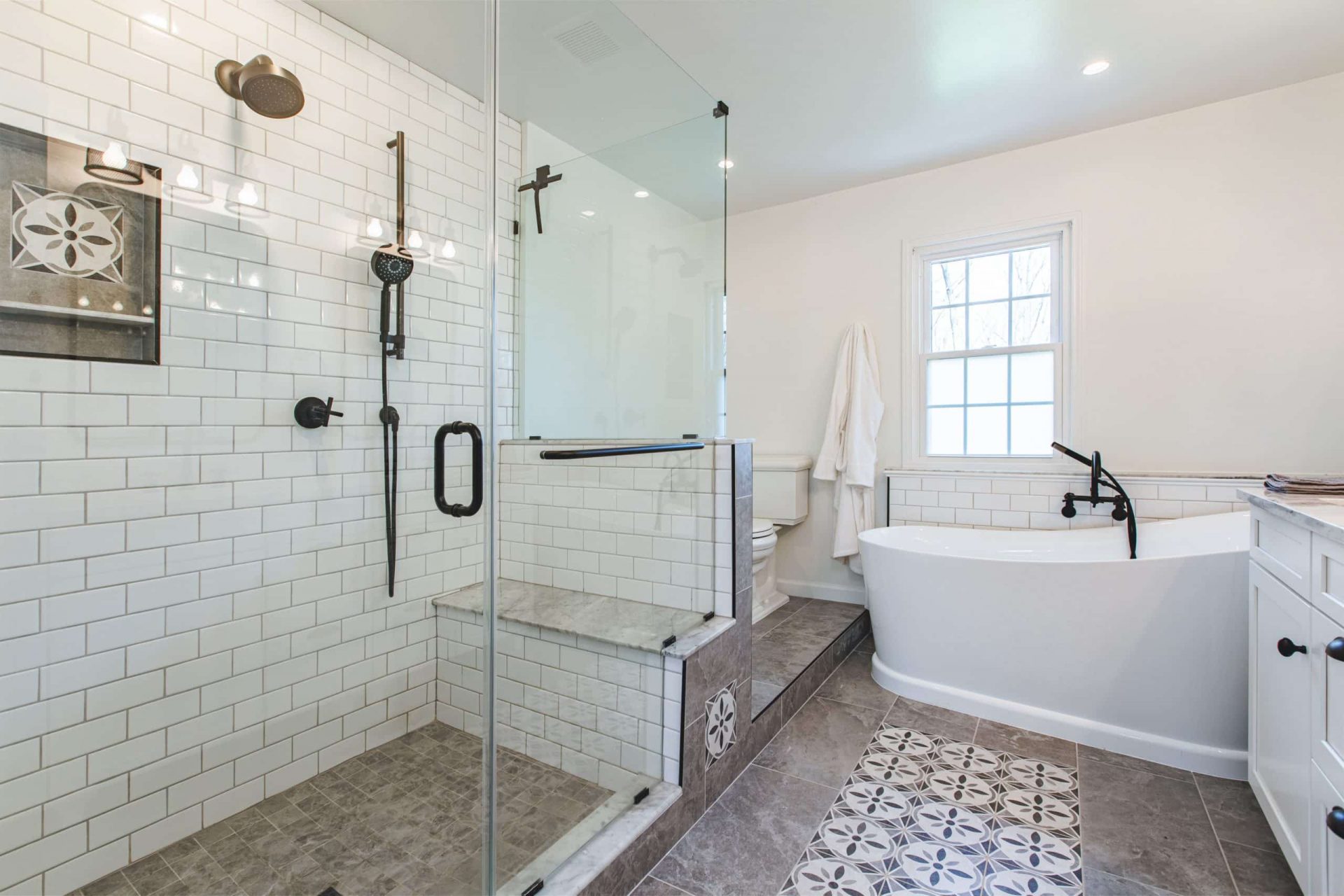
The neighborhoods we hear about most are Marley, Ferndale, Point Pleasant, Sun Valley and Cromwell. They differ in age and lot size, but many homes follow a postwar pattern: modest kitchens, compact baths and layouts built before open plans were common. Typical projects are opening a wall between the kitchen and dining room and turning a tub-shower combination into a larger walk-in shower.
Because Glen Burnie grew through the mid-20th century, many houses date from the decades when lead-based paint was common. We plan for the EPA’s lead-safe rules from the first visit on any home built before 1978, not as a mid-project surprise. Older houses can also have original electrical panels that a new kitchen will outgrow, so we check capacity early.
Permits, showroom and next steps
Glen Burnie permits come from the Anne Arundel County Department of Inspections and Permits. That is a different office, with different forms, from Howard County’s, so make sure whoever is quoting your job has worked in Anne Arundel.
Our Columbia showroom is about 20 minutes away via MD-100 West. To see what each project involves, read about kitchen remodeling in Glen Burnie and bathroom remodeling in Glen Burnie, or compare budgets in our Maryland kitchen cost guide and Maryland bathroom cost guide.