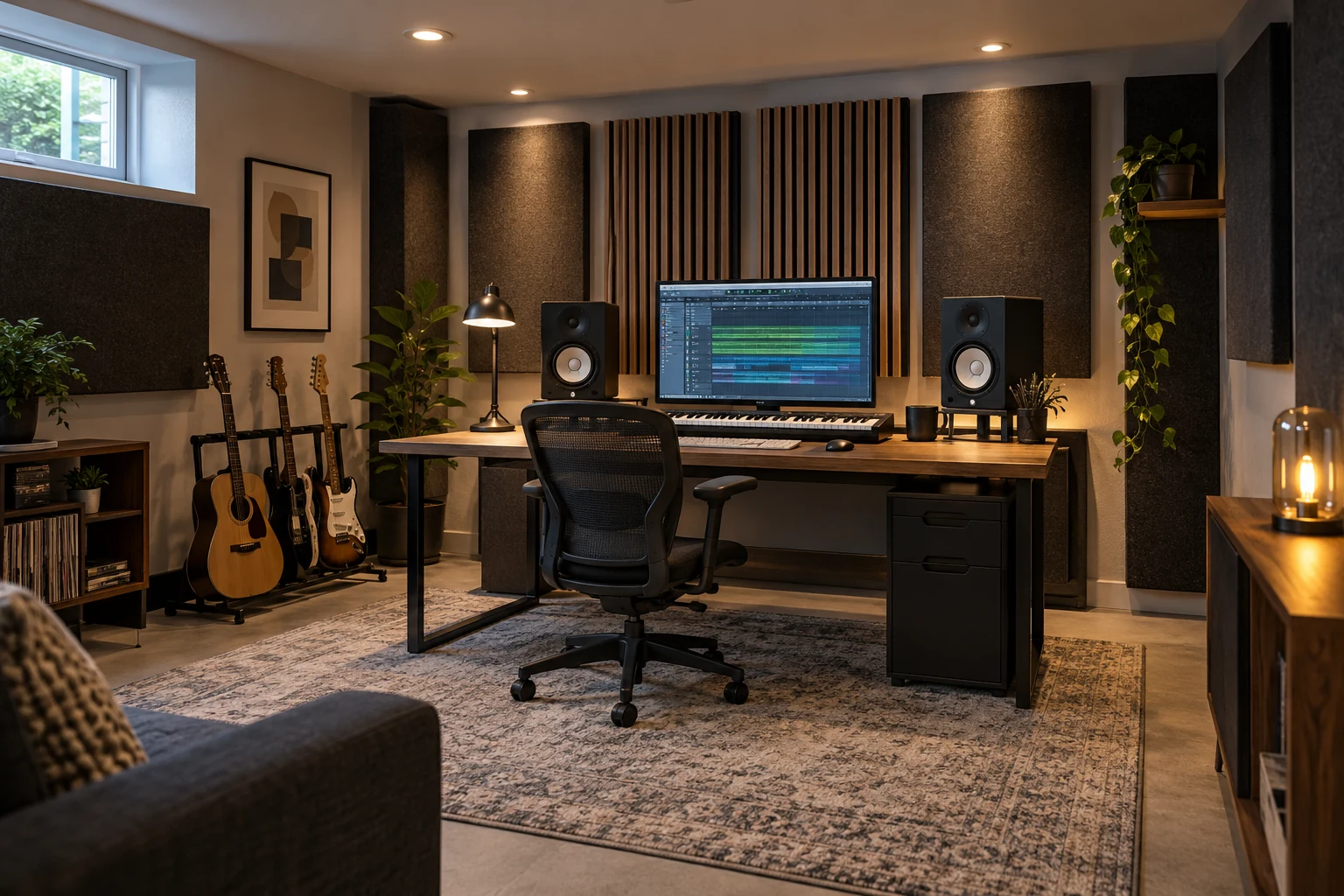
Plan a basement music studio by separating equipment placement, room acoustics and sound isolation. Review the space and adjoining rooms before selecting treatments; foam or curtains alone do not establish that music stays inside. Discuss the proposed basement remodel.
A basement music studio starts with the instruments and recording equipment you want to use. Plan their positions alongside the desk, seating and storage. Review moisture, lighting and electrical needs, then discuss room acoustics separately from sound isolation.
Basic Music Studio Ideas
Planning Your Basement Music Studio
Determine Your Needs
Before you start, consider what you’ll need in your basement music studio. Think about the instruments, equipment, and recording devices you use. Make a list of essential items and plan your space accordingly.
Soundproofing and Acoustics
Treat room acoustics and sound isolation as separate planning questions. Ask an acoustics professional to assess the proposed studio and sound paths before choosing wall treatments. Do not assume foam or curtains prevent music from reaching the rest of the house.
Basement Finishing for a Music Studio
Moisture Control
Basements can be prone to moisture. Ensure proper waterproofing to protect your equipment. Install a dehumidifier to maintain an ideal humidity level.
Lighting and Electrical Work
Good lighting is essential for a productive music studio. Install sufficient lighting that mimics daylight. Ensure your basement has enough electrical outlets to power all your equipment safely.
Flooring and Wall Treatments
Discuss the selected flooring and wall treatments with the acoustic designer. Compare the proposed room treatments with the intended recording or practice use rather than assuming carpet, mats or panels guarantee a particular sound quality.
Furnishing Your Music Studio
Comfortable Seating and Workspaces
Invest in comfortable seating and ergonomic furniture. A good chair and desk can make long recording sessions more enjoyable.
Storage Solutions
Use shelves, racks, and cabinets to organize your equipment. Proper storage helps maintain a clutter-free and efficient workspace.
Decoration and Personal Touches
Add personal touches to your basement music studio to make it inspiring. Use posters, artwork, and decor that reflect your musical style.
Common Questions about Basements
1. How much does it cost to build a basement music studio?
Basic Setup: $2,000 – $5,000
- Acoustic Treatment: $500 – $1,500
- Acoustic panels, bass traps, and diffusers to improve sound quality.
- Soundproofing: $500 – $1,000
- Foam, carpets and curtains are room-treatment options to discuss; their presence does not establish sound isolation.
- Basic Equipment: $1,000 – $2,500
- Entry-level microphones, audio interfaces, monitors, and cables.
- Furniture: $200 – $500
- Basic desk, chair, and shelves for equipment and materials.
Intermediate Setup: $5,000 – $15,000
- Enhanced Acoustic Treatment: $1,000 – $3,000
- High-quality acoustic panels and advanced sound diffusion solutions.
- Advanced Soundproofing: $2,000 – $5,000
- Professional-grade insulation, soundproof doors, and double-glazed windows.
- Mid-Range Equipment: $2,000 – $5,000
- Mid-range microphones, audio interfaces, monitors, and additional accessories.
- Furniture and Decor: $500 – $2,000
- Ergonomic furniture, storage solutions, and aesthetic improvements.
Professional Setup: $15,000 – $50,000+
- High-End Acoustic Treatment: $3,000 – $10,000
- Custom-designed acoustic treatments and professional installation.
- Professional Soundproofing: $5,000 – $15,000
- Complete sound isolation construction, including floating floors and resilient channels.
- High-End Equipment: $5,000 – $20,000
- Top-of-the-line microphones, preamps, interfaces, monitors, and other studio gear.
- Custom Furniture and Aesthetics: $2,000 – $5,000
- Custom-built desks, high-quality seating, and advanced storage solutions.
- Miscellaneous Costs: $1,000 – $5,000
- HVAC adjustments, electrical work, and any other unforeseen expenses.
Additional Considerations
- Permits and Inspections: $500 – $1,500
- Depending on your location, you might need building permits and inspections.
- Professional Services: $2,000 – $10,000
- Costs for hiring architects, contractors, and acoustic consultants.
2. How do I soundproof my basement studio?
Ask an acoustics professional to review the walls, ceiling, doors and other sound paths. Specify sound-isolation work separately from the room treatments chosen for listening or recording.
3. What kind of lighting is best for a music studio?
Compare lighting at the instruments, music stands and controls you use. Try the proposed fixtures for visibility and comfort in those positions; neither a daylight label nor an LED source guarantees a health or performance benefit.

Creating a basement music studio is a rewarding project that can greatly enhance your musical endeavors. With proper planning and basement finishing, you can transform your space into a professional and inspiring studio. Start your basement music studio project today and take your music to the next level!
Separate the equipment list from the room-treatment discussion
List the instruments, recording devices and other equipment you expect to use. Compare their locations with the desk, seating and storage you need. Discuss room acoustics and sound transfer as separate questions rather than assuming a decorative panel answers both, and bring basement moisture and outlet concerns into the planning conversation.
What should I list before arranging a basement music studio?
List the instruments, recording equipment and essential items you expect to use. Compare their placement with the workspace and storage plan.
What should I discuss before choosing studio furnishings?
Discuss moisture, lighting, electrical outlets and the room-treatment plan. Keep those questions separate from the desk and seating appearance.
Planning references for this topic
Remodeling Cost vs. Value reference for the wider project discussion; EPA construction and demolition debris resource for questions about removed materials.
Review the room before buying acoustic products
Prepare a list of instruments, intended use and the adjoining rooms. The NIOSH noise resource supports a separate discussion about hearing protection. It does not certify that a basement studio or decorative acoustic panel achieves sound isolation.
Ready to start your project?
Free consultations, no obligation, and design experts at four DMV showrooms.
Get a free estimate