GBC offers a free in-home estimate. Design drawings follow a signed contract; discuss the proposed design and installation scope with the showroom.
Concrete countertops offer custom color, texture and embedded details, but maintenance and the possibility of cracks need to be part of the choice. Compare the look you want with the care you are willing to perform before selecting a kitchen surface. Explore the remodeling service.
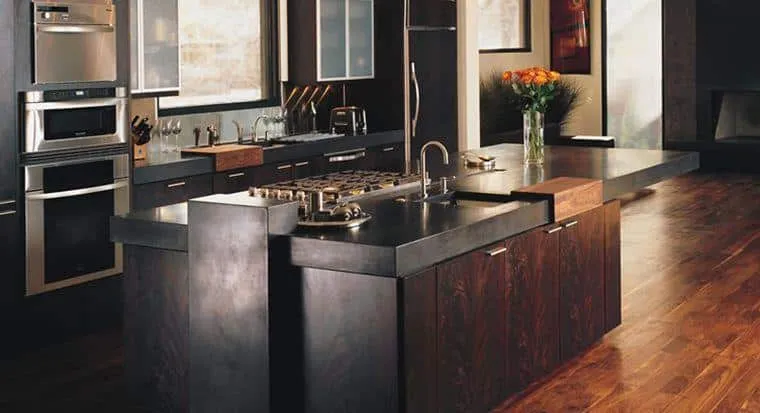
Should You Consider Concrete for Kitchen Countertops?
Homeowners often have a hard enough time deciding on the best material for their new kitchen countertops. The last thing they need is a new entrant in the market, but kitchen design enthusiasts and innovators don’t care about that. Enter the concrete countertops, which have gained quite a fan base with the advent of cool staining and coloring techniques.
Concrete countertops are right up there with stainless steel and recycled material in popularity as well as problems. Concrete countertops are definitely unique and can be quite beautiful. However, is it really worth taking the risk and trouble by putting it in your kitchen? Here are some considerations for you.
On the plus side

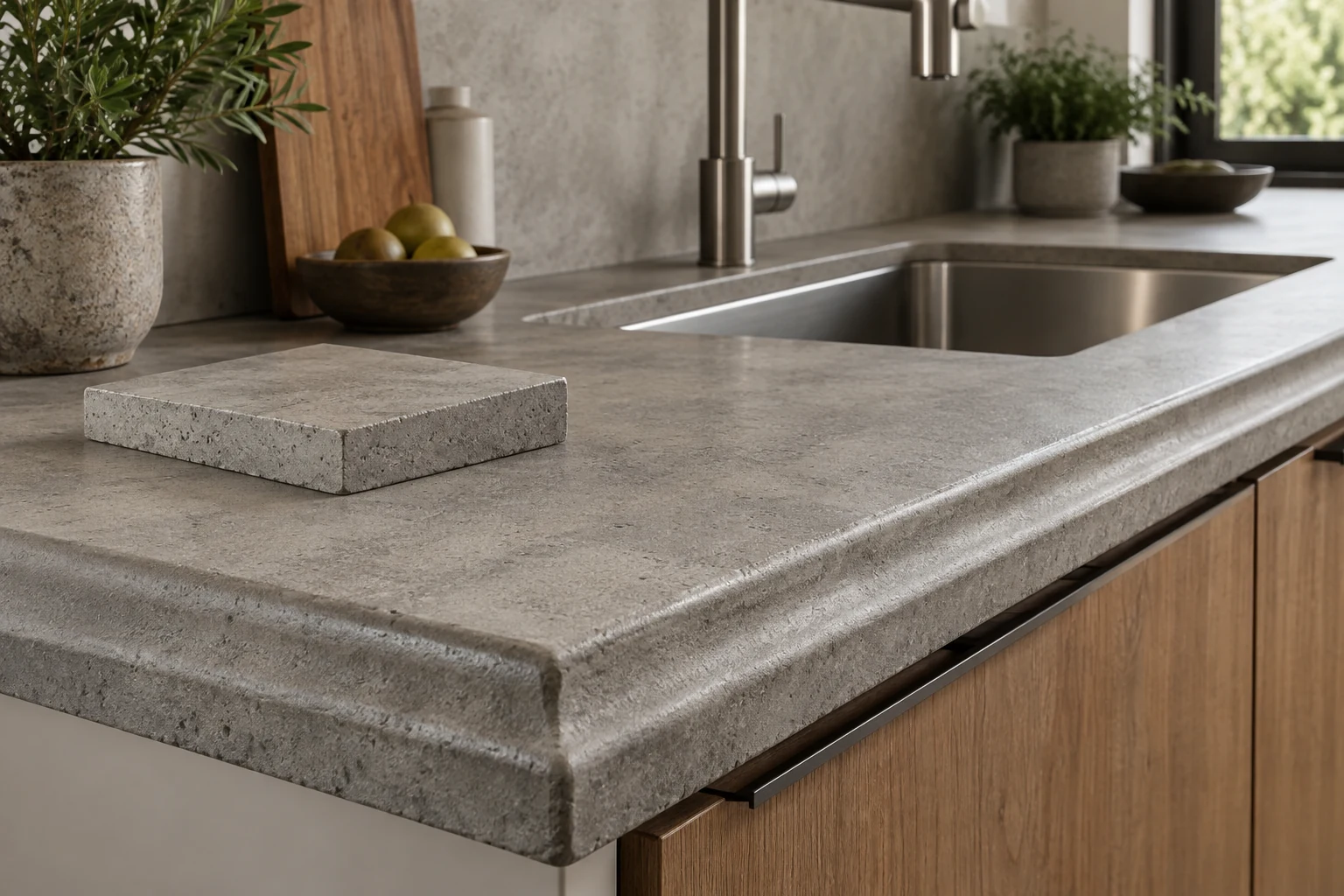
You may be forgiven in thinking that concrete countertops will look anything like your sidewalk or driveway. Sure, the base material is still a mix of cement and sand, and it is just as durable as any concrete surface. However, the similarity ends there. Concrete counters often come in colorized and/or stained varieties, so they look nothing like your typical sidewalk. Some may even look a lot like natural stone, especially in the hands of a true artist.
You also have the freedom to change the appearance to achieve any color, design, and texture you want. You can ask your installer to embed shells, glass, stones, or any other material you want in artistic patterns to produce a truly bespoke countertop. It is not a natural stone like granite, but no two concrete countertops are identical.
Functionally, concrete is tough. It is resistant to heat and can stand a lot of use and abuse in the most active kitchen with any number of small children and careless teenagers. This is why it is popular in kitchens as well as bathroom remodels.
On the minus side
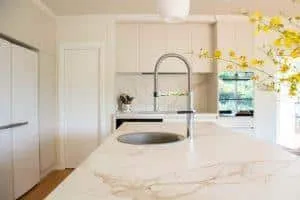
However, concrete countertops have their share of downsides, as many early adopters have discovered to their dismay. Below is a brief rundown of each painful issue.
Porosity
Concrete is quite porous. That may surprise you since it is the material of choice for everything from sidewalks to houses. What you may not know is that concrete requires a thin layer of cement or other material to seal it. The same goes for concrete countertops, which shows up stains quite easily. It absorbs all kinds of liquids, and may even encourage the growth of bacteria without proper sealing.
Even with a sealer, concrete can still absorb most liquids, including water, resulting in a splotchy, sloppy surface that can make your kitchen look dirty. If you want a sleek, pristine kitchen, you might have better luck with granite or engineered quartz countertops.
High maintenance
Despite its hardwearing reputation, concrete countertops actually require a surprising amount of upkeep. Aside from the regular resealing (some experts recommend every one to three years, depending on use), you should also apply a protective wax coating once a month to keep it from staining.
You also have to be careful with the cleaning agents and tools you use. Abrasive detergents and scouring pads strip away the sealer and lay the concrete bare for stain-causing agents common in kitchens and bathrooms.
Cracks
Installers pour custom concrete countertops onsite, which can be a problem when it settles because it can result in hairline cracks. You can buy pre-cast countertops, which is less likely to develop these cracks, but it can still happen. Some installers provide some type of reinforcement for the concrete, such as wire mesh, rebar, or fiber support to minimize cracking, although these will not prevent it altogether. The good news is most hairline cracks are not that obvious, and they are easy to repair. That said, it is a potential problem you will not encounter with quartz or granite countertops.
Cost
Believe it or not, good quality concrete countertops by expert installers are more expensive than quartz or granite countertops. Prices start from $75 per square foot, and it can go much higher if you choose a complex design.
One of the reasons for the high cost is the time it takes to install them. For concrete countertops poured onsite, you have to wait as long as 28 days for it to cure completely. You might be able to cut down the waiting time onsite considerably by going the pre-cast route, but unless you choose an existing one, you still have to wait for it to be ready for final installation.
Conclusion
Concrete countertops may be trending today, but they are not a good choice for many homeowners. They have too many drawbacks to be practical, especially if you have a tight budget and a busy schedule. It can give your kitchen or bathroom a unique look, but so can granite countertops, and at much less trouble or risk. In the final analysis, concrete countertops are just too much trouble to be worth it.
Discuss the countertop material, finish and installation requirements before choosing it for your kitchen. GBC Kitchen and Bath
Visit our showrooms in Alexandria, Ashburn, Rockville or Columbia to discuss your remodeling plans.
Ask about the finish before choosing the look
A custom pattern can make concrete appealing, but the decision should also cover the surface you will clean after meals. Ask the supplier to explain sealing, protective coatings and the cleaning products appropriate for the finished counter. The discussion here distinguishes the appearance possibilities from porosity, maintenance and cracking concerns. Keep those concerns separate from the design sample: liking a color does not answer how you will care for it. Compare concrete with the countertop materials you are considering, and ask the installer to explain the difference between an onsite pour and a precast option for your project.
Frequently asked questions
What makes concrete countertop designs distinctive?
Color, texture and embedded details offer ways to customize concrete. The examples here include glass, shells and stones. Choose a sample you like, then discuss its care requirements as a separate part of the material decision.
Does choosing precast concrete remove every cracking concern?
No. The discussion here says precast counters are less likely to develop cracks, but cracking can still occur. Ask the supplier how the proposed counter is constructed and how a crack would be addressed before selecting it.
Related planning references
For material suitability and installation instructions, consult EPA material and finish selection and EPA remodeling work practices.
Ready to start your project?
Free consultations, no obligation, and design experts at four DMV showrooms.
Get a free estimate